
The Efficiency Paradox: User Perceptions and Systemic Barriers in the Implementation of Electronic Medical Records
Article Sidebar
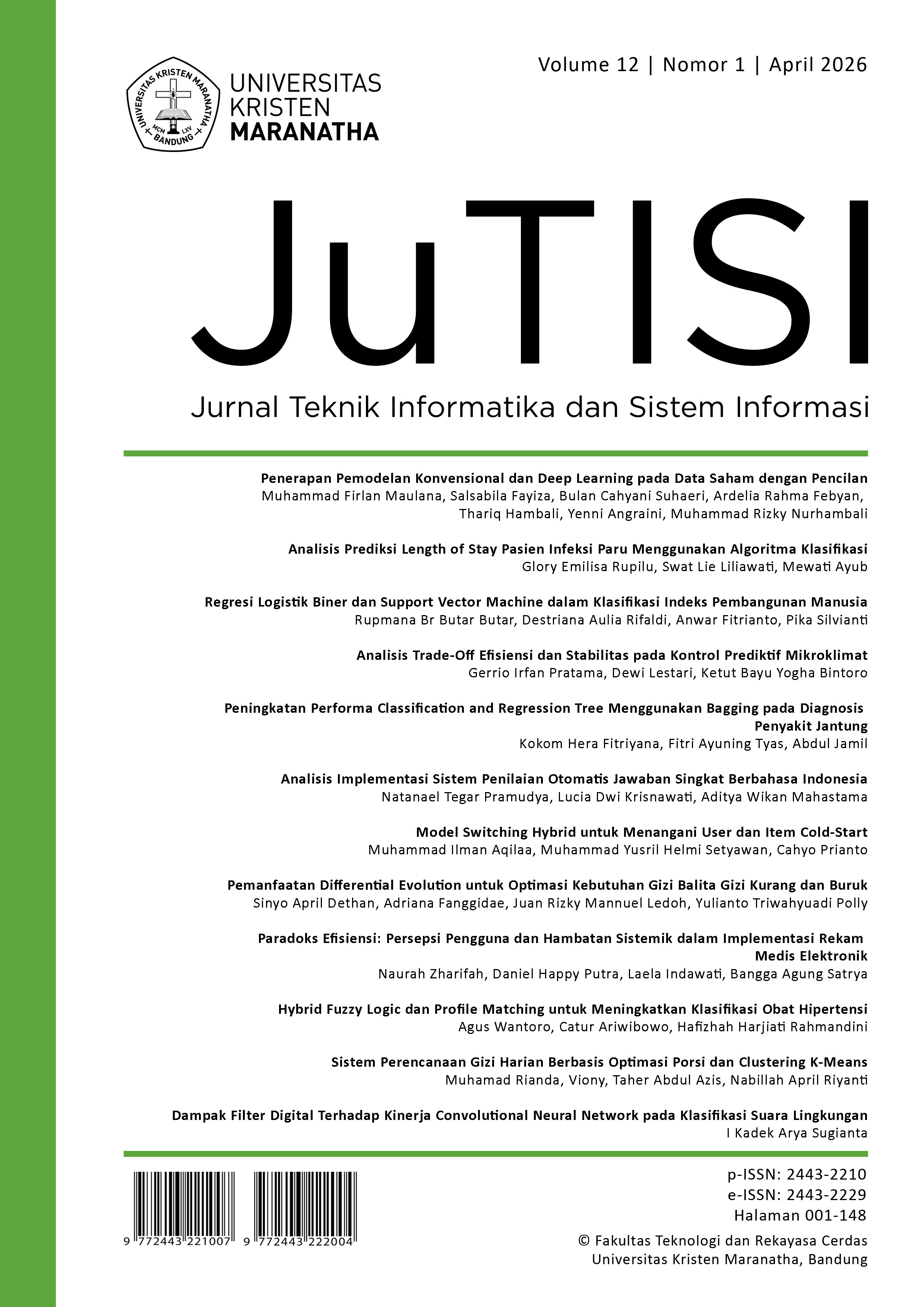
Published:
Apr 23, 2026
Keywords:
Efisiensi Pelayanan, Implementasi Sistem, Rekam Medis Elektronik, Rumah Sakit, Teknologi Informasi Kesehatan Electronic Medical Records, Health Information Technology, Hospital, Implementation, Service Efficiency
Main Article Content
Abstract
This study aims to analyze the implementation of electronic medical record systems in improving the efficiency of health services. The approach used is a qualitative method with data collection techniques through in-depth interviews and observations of several health service units. The results of the study indicate that this system has a positive impact on accelerating the process of recording and accessing patient medical data, as well as reducing the use of physical documents. However, several challenges were also identified, such as limited technical training for healthcare staff and unstable internet connectivity. The conclusion of this study is that the electronic medical record system has the potential to improve the efficiency of healthcare services, but it requires support from comprehensive training and adequate technological infrastructure.
Downloads
Download data is not yet available.
Article Details
How to Cite
[1]
N. Zharifah, D. H. Putra, L. Indawati, and B. A. Satrya, “The Efficiency Paradox: User Perceptions and Systemic Barriers in the Implementation of Electronic Medical Records”, JuTISI, vol. 12, no. 1, pp. 98–110, Apr. 2026.
Section
Articles

This work is licensed under a Creative Commons Attribution-NonCommercial 4.0 International License.
This is an open-access article distributed under the terms of the Creative Commons Attribution-NonCommercial 4.0 International License (https://creativecommons.org/licenses/by-nc/4.0/) which permits unrestricted non-commercial used, distribution and reproduction in any medium.
This work is licensed under a Creative Commons Attribution-NonCommercial 4.0 International License.